
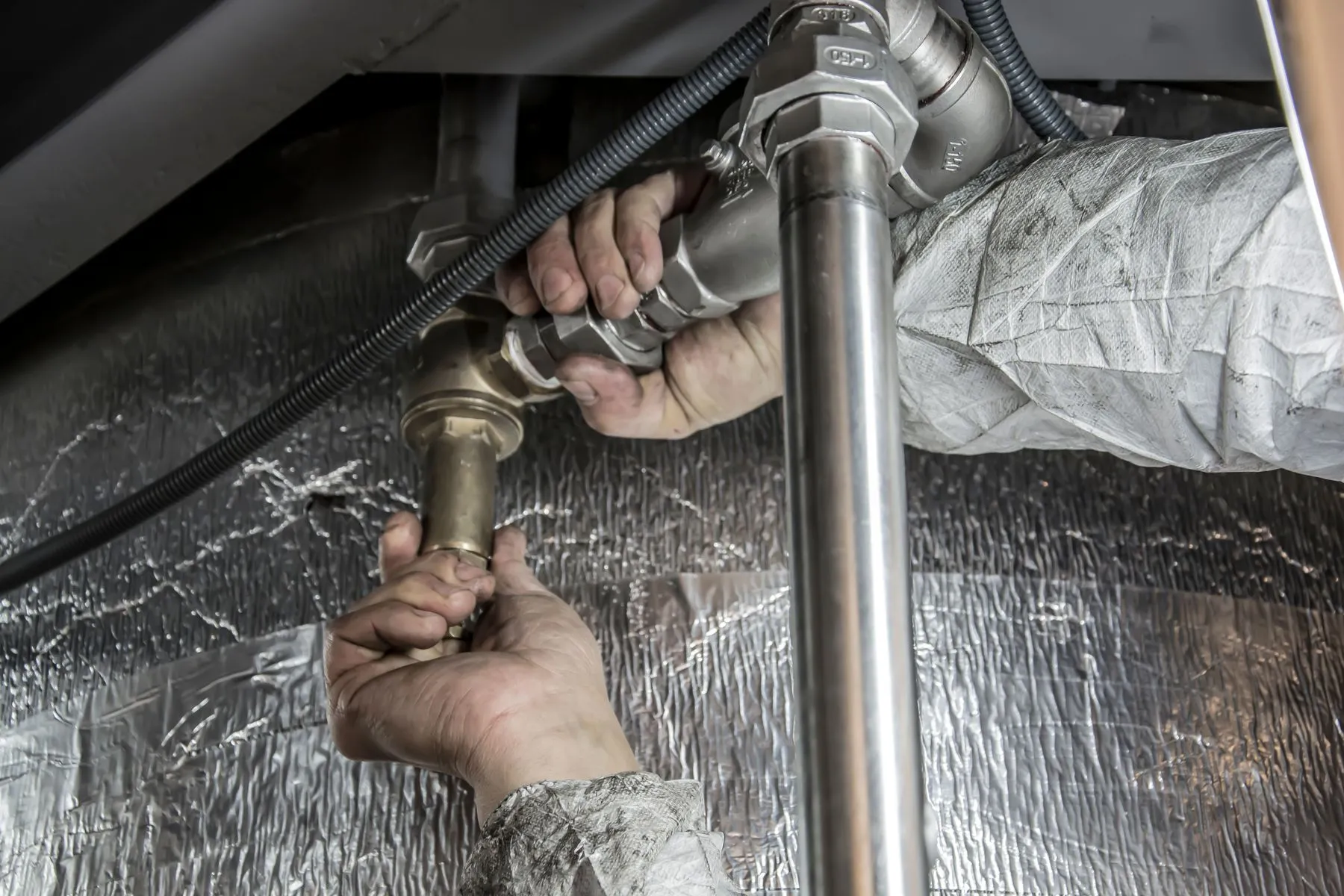
Why Slab Leaks Are So Common in Santee
Slab-on-grade construction was the standard for the tract neighborhoods of Carlton Hills and the streets around Santee Lakes, with soft copper supply lines routed directly beneath the concrete. Decades of hard Padre Dam water moving through those lines wears them thin from the inside, while contact with soil and slab can corrode them from the outside. Hot-water lines tend to go first — heat accelerates both processes — which is why the most common first clue we hear about is a floor that feels inexplicably warm in one spot.
Pinpoint Accuracy, Minimal Demolition
Guessing is expensive when the pipe is under concrete. We verify the leak with meter and pressure testing, isolate the hot side from the cold, and then locate it precisely with electronic amplification and, where useful, thermal imaging. Because most Santee tract homes are single-story, we can often skip slab demolition entirely by rerouting the failed line up through the walls and attic — abandoning the compromised pipe in place and giving you a new, accessible line instead.
Straightforward Pricing on a Stressful Repair
A slab leak is nobody’s idea of a good week, so we keep the process calm: a firm flat-rate quote for each viable option — spot repair, reroute, or a repipe if multiple lines are near failure — with the tradeoffs of each explained before you commit to anything.
Frequently Asked Questions
What does a slab leak sound or feel like?
Homeowners describe a hiss or faint rush of water with everything off, warm patches underfoot, damp carpet edges, or a water bill that climbs for no reason. Two or more of those together justify a detection visit.
Can a technician get to Santee quickly for something like this?
Yes — an active slab leak moves to the front of our schedule, and the drive from El Cajon to any Santee neighborhood takes our techs only minutes, so detection usually happens the day you call.
Is a reroute as good as repairing the pipe under the slab?
Often it is better. A reroute retires the entire vulnerable run instead of patching one point on an aging line, and the new pipe stays accessible if it ever needs attention decades from now.